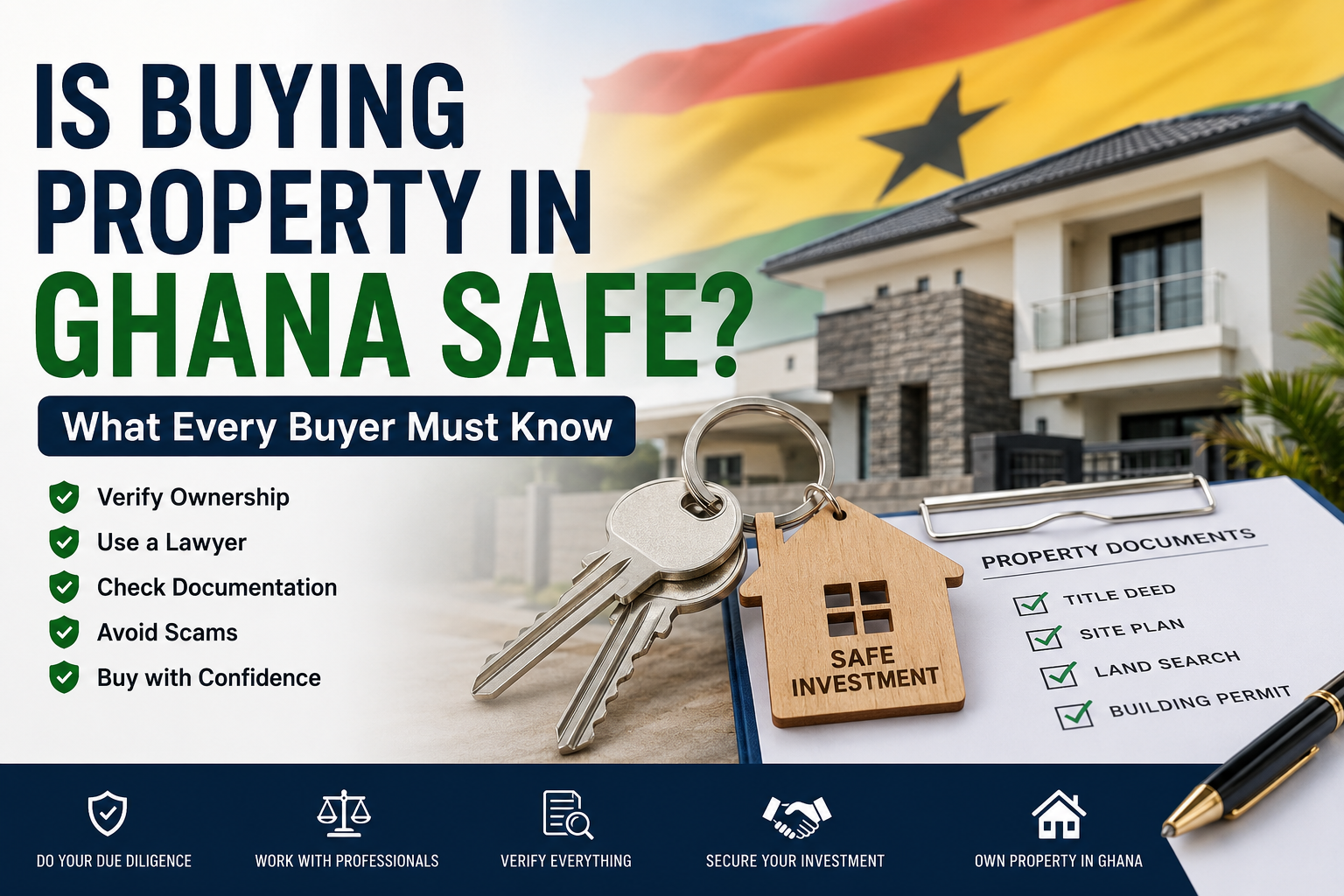
Buying property in Ghana has become increasingly popular among overseas investors, Ghanaians living abroad, retirees, professionals relocating for work and families looking to establish long term roots. The country’s stable democracy, expanding economy, growing middle class and attractive property market continue to attract buyers from the United Kingdom, United States, Canada, Europe and beyond.
Yet one question appears more than almost any other:
Is buying property in Ghana safe?
The short answer is yes, provided you understand how the Ghanaian property market works and take the correct legal and practical precautions before purchasing.
In this guide, you will learn exactly how to buy property safely, avoid common mistakes, understand land ownership, reduce your risks and complete your purchase with confidence.
Quick Answer
Yes, buying property in Ghana can be very safe when you carry out proper due diligence. Always verify land ownership, work with reputable estate professionals, instruct an experienced property lawyer, confirm documentation with the appropriate authorities and avoid paying money before completing legal checks. Following the correct buying process significantly reduces the risk of fraud and helps ensure a secure investment.
Why Ghana Attracts International Property Buyers
Ghana continues to be one of West Africa’s most attractive destinations for property investment.
Many buyers are attracted by:
Political stability
A growing economy
English as the official language
Strong cultural ties for the Ghanaian diaspora
Increasing demand for quality housing
Expanding infrastructure
Attractive rental opportunities
Year round tourism
Growing short stay accommodation market
Many overseas buyers purchase property for:
Retirement
Holiday homes
Family relocation
Rental income
Long term investment
Future development
Returning to Ghana permanently
Is Buying Property in Ghana Really Safe?
The answer depends largely on how you buy rather than what you buy.
Ghana has a well established property market with thousands of successful property transactions completed every year.
However, like many developing property markets around the world, buyers who rush into purchases without proper checks expose themselves to unnecessary risks.
The safest buyers usually:
Conduct extensive due diligence
Use experienced property lawyers
Verify ownership independently
Never rely solely on verbal assurances
Confirm legal documentation before transferring funds
Following these principles dramatically improves your chances of a successful purchase.
Understanding Search Intent
People searching “Is Buying Property in Ghana Safe?” are often asking questions such as:
Can foreigners buy property in Ghana?
Is Ghana property legitimate?
Can land ownership be trusted?
How do I avoid land scams?
Is buying a house in Ghana a good investment?
What legal checks should I make?
How do I know the seller owns the property?
This guide answers each of these questions.
Common Risks When Buying Property in Ghana
Although many purchases proceed without problems, buyers should remain aware of several risks.
Multiple Sales of the Same Land
Occasionally, land has been sold to more than one buyer by dishonest individuals.
Proper legal verification greatly reduces this risk.
Fake Ownership Documents
Some fraudulent sellers produce forged documentation.
Never assume documents are genuine simply because they appear official.
Independent verification is essential.
Boundary Disputes
Neighbouring landowners may disagree over property boundaries.
Professional site surveys help identify these issues before purchase.
Family Land Disputes
Certain properties belong to extended families rather than individuals.
It is important to establish who has legal authority to sell.
Unfinished Developments
Some buyers purchase off plan properties from developers who later experience delays.
Research the developer’s track record before committing.
Understanding Land Ownership in Ghana
One of the biggest differences between Ghana and many Western countries is the structure of land ownership.
Land may be owned by:
Customary Land
Owned by traditional authorities or families.
These transactions require additional verification.
State Land
Owned by the government.
Private Land
Owned by individuals or companies.
Understanding which category your property falls under is an important part of the buying process.
Can Foreigners Buy Property in Ghana?
Yes.
Foreign nationals can legally purchase buildings and lease land.
However, Ghana’s Constitution generally prevents non citizens from owning freehold interests in land.
Instead, foreign buyers typically acquire long term leasehold interests, often for up to 50 years, with the possibility of renewal, subject to the terms of the lease and applicable law.
This arrangement is common and widely used throughout Ghana.
How to Verify Property Ownership
One of the safest steps any buyer can take is verifying ownership independently.
This normally involves:
Reviewing title documents
Request copies before making any payment.
Conducting legal searches
Your lawyer should carry out official searches to confirm ownership and identify any registered interests or restrictions affecting the property.
Confirming planning approvals
Where appropriate, verify that buildings have the necessary planning permissions and approvals.
Inspecting the property
Always visit the property personally or appoint someone you trust.
Speaking with neighbours
Local residents often provide useful background information.
Checking survey plans
Ensure the property’s measurements match official records.
Safe Buying Process Step by Step
Step 1
Choose the right property.
Step 2
View the property.
Step 3
Instruct an experienced Ghana property lawyer.
Step 4
Carry out due diligence.
Step 5
Verify ownership.
Step 6
Negotiate the purchase price.
Step 7
Sign the purchase agreement.
Step 8
Transfer funds securely.
Step 9
Complete legal registration.
Step 10
Take possession.
Buying From a Property Developer
Buying from an established developer often offers advantages.
These include:
Newly built homes
Modern facilities
Structured payment plans
Professional contracts
Planned communities
Better infrastructure
However, buyers should still investigate:
Previous developments
Delivery history
Customer reviews
Financial stability
Construction quality
Buying From an Individual Seller
Private sales may provide attractive pricing but require additional care.
Ensure:
Identity checks are completed.
Ownership is verified.
Family consent is obtained where necessary.
Legal documentation is reviewed.
Payments are traceable.
Contracts are professionally prepared.
Popular Places to Buy Property in Ghana
Accra
The country’s largest property market offers:
Luxury apartments
Family homes
Investment properties
Commercial opportunities
Popular areas include:
Airport Residential Area
Cantonments
East Legon
Roman Ridge
Labone
Osu
Spintex
Adjiringanor
Abelemkpe
Ridge
Tema
Popular for professionals working within the port and industrial sectors.
Offers:
Family housing
Gated communities
Investment opportunities
Kumasi
Known for:
Lower purchase prices
Expanding developments
Strong local demand
Takoradi
Growing because of industrial activity and infrastructure investment.
Cape Coast
Increasingly attractive for tourism related investments and retirement living.
Average Property Prices in Ghana
Prices vary significantly depending on location, property type, size, specification and market conditions.
Typical examples include:
Property Type
Approximate Price Range
One bedroom apartment
From around US$60,000
Two bedroom apartment
US$90,000 to US$180,000
Three bedroom house
US$150,000 to US$350,000
Luxury villas
US$500,000 and above
Residential land
Varies considerably by location
Prime areas of Accra command higher prices than many regional locations.
Should You Buy Property Without Visiting Ghana?
It is possible, particularly for overseas buyers.
However, additional safeguards become even more important.
These include:
Independent property inspections
Video viewings
Lawyer representation
Certified documentation
Trusted estate professionals
Secure payment arrangements
Many members of the Ghanaian diaspora successfully purchase property remotely using experienced local representatives.
Mistakes to Avoid
Many property problems are avoidable.
Common mistakes include:
Paying deposits too quickly
Never transfer funds before completing due diligence.
Not using a lawyer
Professional legal advice is one of your best investments.
Trusting verbal promises
Always insist on written agreements.
Ignoring documentation
Every document should be reviewed carefully.
Buying purely because the price looks low
An unusually cheap property may indicate hidden problems.
Skipping independent inspections
Always verify the property’s condition.
Tips for Overseas Buyers
If you live outside Ghana:
Work with experienced professionals.
Schedule regular video updates.
Keep copies of all paperwork.
Use secure international payment methods.
Avoid cash transactions where possible.
Ask detailed questions.
Request progress reports.
Confirm every stage before releasing funds.
Patience often leads to better outcomes than rushing into a purchase.
Is Property in Ghana a Good Investment?
Many investors consider Ghana an attractive long term property market because of:
Population growth
Urban expansion
Housing demand
Tourism
Economic development
Increasing international interest
Rental income opportunities
Diaspora investment
Like any investment, property values can rise or fall. Buyers should assess their financial goals, research the local market and seek professional advice before committing.
Frequently Asked Questions
Is buying property in Ghana safe for foreigners?
Yes. Foreign nationals can safely buy property in Ghana when they follow the correct legal procedures, use experienced professionals and complete thorough due diligence.
Can I buy land in Ghana if I live in the UK?
You can acquire a long term leasehold interest in land while living abroad. Many UK based buyers successfully purchase property remotely with appropriate legal representation.
How do I avoid property scams in Ghana?
Verify ownership independently, use an experienced lawyer, inspect the property, avoid cash payments and never rely solely on verbal agreements.
Do I need a lawyer to buy property in Ghana?
While not every transaction legally requires a lawyer, using one is strongly recommended. A qualified property lawyer can help verify ownership, review contracts and reduce the risk of costly mistakes.
Is property registration important?
Yes. Proper registration helps formalise your legal interest in the property and provides greater protection. Your lawyer can advise on the relevant registration process for your transaction.
Can I earn rental income from Ghana property?
Yes. Many investors generate rental income through long term residential lets and short stay accommodation, particularly in areas with strong demand.
Final Thoughts
Buying property in Ghana can be a safe and rewarding investment when approached carefully. The country’s expanding property market offers opportunities for homeowners, investors and members of the Ghanaian diaspora, but success depends on following the correct process rather than making quick decisions.
Thorough due diligence, independent legal advice, verification of ownership and working with trusted property professionals can significantly reduce risk. Whether you are purchasing your first home, investing in a rental property or planning your return to Ghana, taking these precautions will help you move forward with confidence.
Browse Ghana Properties with Confidence
Whether you are buying your first home, searching for an investment property, looking for land, relocating to Ghana or planning your retirement, Expat Homes Ghana is here to help.
Browse our latest properties, speak with our knowledgeable team for independent guidance, request personalised property advice or list your property with us to reach buyers both in Ghana and around the world. We are committed to making your property journey as straightforward, transparent and successful as possible.