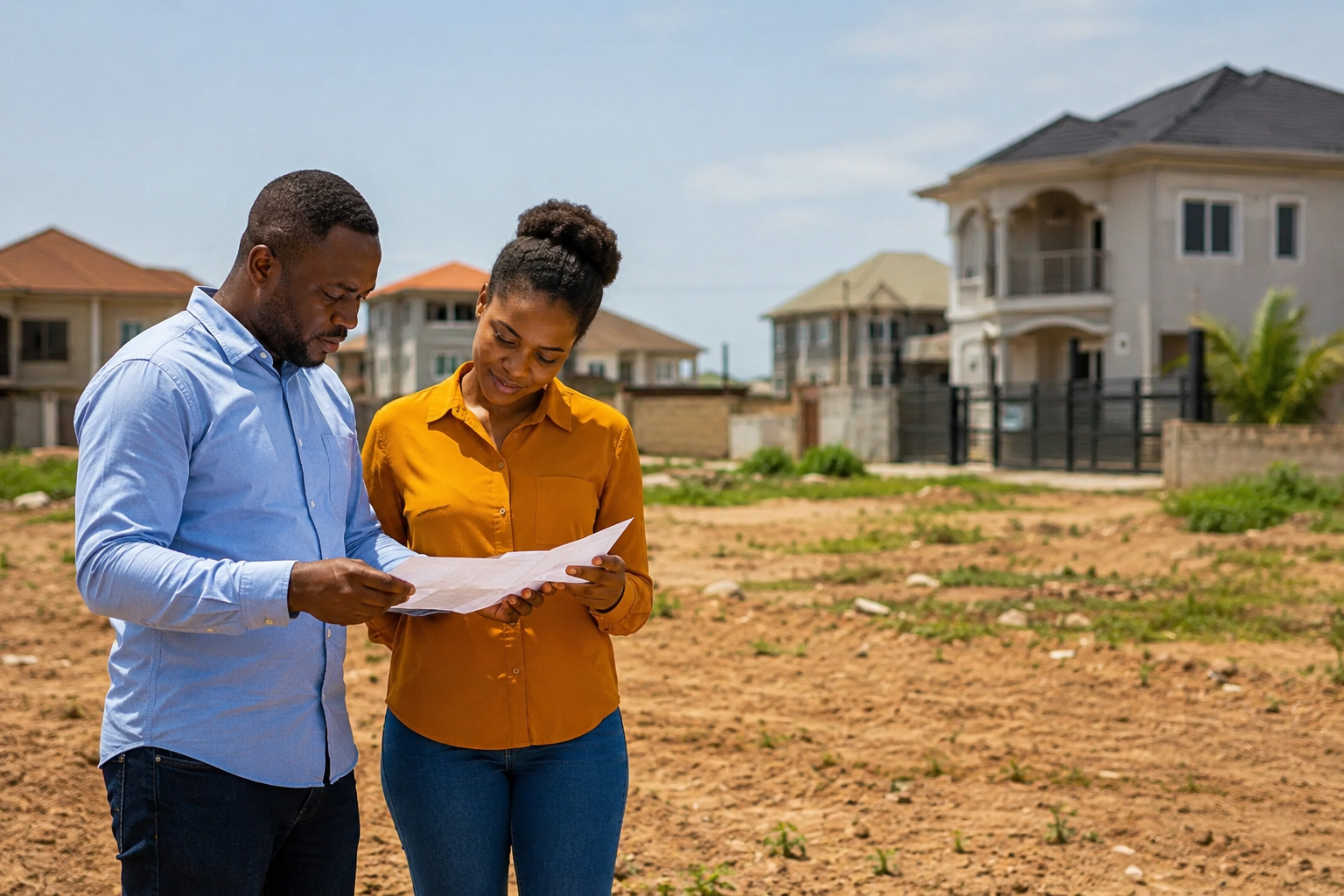
Purchasing land in Ghana can be one of the most rewarding investments you ever make. Whether you are planning to build your dream home, develop apartments, invest for future capital growth or secure land for commercial use, Ghana offers exciting opportunities for both local and international buyers.
However, buying land in Ghana requires careful planning, legal due diligence and an understanding of the country’s land ownership system. Every year, buyers lose significant amounts of money because they purchase land without carrying out the proper checks. The good news is that these risks can usually be avoided with the right knowledge and professional guidance.
In this guide, Buying Land in Ghana Explained, you will learn exactly how the process works, who can legally own land, how to avoid scams, what costs to expect and the steps you should follow before paying a single pound, dollar or cedi.
Whether you are living in the United Kingdom, United States, Canada, Europe or elsewhere in the world, this guide will help you make informed decisions before investing in Ghanaian property.
Quick Answer
Buying land in Ghana involves identifying suitable land, verifying ownership, checking legal documentation, confirming there are no disputes, agreeing a purchase price, preparing legal contracts and registering the transaction with the appropriate authorities. Always use an experienced Ghanaian property lawyer and trusted estate professionals before making any payment to reduce the risk of fraud.
Why Buy Land in Ghana
Ghana continues to attract property buyers from around the world thanks to its political stability, growing economy and increasing demand for housing.
Many overseas Ghanaians choose to invest in land because it provides long term security and the opportunity to build at their own pace.
Land ownership can also provide:
Long term capital appreciation
Passive investment opportunities
Future development potential
Retirement planning
Family inheritance
Commercial opportunities
Agricultural investment
Holiday home construction
As cities continue expanding, land values in many areas have steadily increased over recent years.
Can Foreigners Buy Land in Ghana?
This is one of the most frequently asked questions.
The simple answer is yes, but there are important restrictions.
Foreign nationals generally cannot own freehold land in Ghana. Instead, they usually acquire leasehold interests.
Lease periods commonly include:
Up to 50 years for non Ghanaian citizens
Longer lease periods for Ghanaian citizens depending on the land classification
Many overseas investors successfully purchase leasehold property every year.
If you are a member of the Ghanaian diaspora and hold Ghanaian citizenship, your purchasing rights may differ from those of non citizens.
Professional legal advice is always recommended before committing to any purchase.
Understanding Land Ownership in Ghana
One of the biggest differences between Ghana and many Western countries is the land ownership structure.
Several different ownership systems exist.
Customary Land
A significant proportion of Ghana’s land is owned by traditional authorities such as chiefs, stools, skins and families.
Transactions involving customary land require additional verification to ensure the seller has authority to sell or lease the land.
State Land
State land is managed by government authorities.
Purchases involving state land often follow different legal procedures.
Family Land
Family owned land can involve multiple beneficiaries.
Buyers should ensure every necessary family representative has approved the transaction.
Private Land
Private individuals and companies also own registered land which can often provide a more straightforward purchasing process when documentation is complete.
The Land Buying Process
Understanding each stage helps minimise risk.
1. Identify Suitable Land
Start by deciding:
Budget
Preferred location
Intended use
Accessibility
Utilities
Development plans
Think carefully about future infrastructure rather than only current conditions.
2. Verify Ownership
Never rely solely on verbal assurances.
Ask for documentation proving ownership.
This may include:
Land title certificates
Lease agreements
Site plans
Allocation documents
Previous transfer records
3. Conduct Due Diligence
Professional searches should establish:
Who owns the land
Whether multiple sales exist
Existing disputes
Court cases
Encumbrances
Government acquisition plans
Skipping this step is one of the biggest mistakes buyers make.
4. Survey the Land
A licensed surveyor should confirm:
Exact boundaries
Plot size
Coordinates
Access roads
Neighbouring developments
This reduces future boundary disputes.
5. Negotiate the Purchase
Agree:
Purchase price
Payment schedule
Completion dates
Responsibilities
Documentation
Everything should be recorded in writing.
6. Prepare Legal Agreements
An experienced property lawyer should prepare or review:
Working with experienced professionals helps reduce risk.
A reputable estate agency can assist with:
Finding verified land
Negotiating prices
Coordinating surveys
Introducing qualified lawyers
Managing overseas purchases
Supporting registration
Professional support often saves buyers both time and money.
Frequently Asked Questions
Can foreigners buy land in Ghana?
Yes. Foreign nationals can usually acquire leasehold interests, although freehold ownership restrictions apply.
How do I know land is genuine?
Carry out professional legal searches, verify ownership documents, confirm boundaries and work with experienced property professionals before making payment.
How long does buying land take?
The timeframe depends on documentation, legal checks and registration. Straightforward transactions can progress relatively quickly, while disputed or incomplete documentation may significantly delay completion.
Is buying land in Ghana safe?
Yes, provided proper legal due diligence is completed and experienced professionals are involved throughout the process.
What documents are needed?
Common documents include site plans, survey plans, land title documents where applicable, indentures, identification documents and legal agreements.
Can I buy land remotely?
Yes. Many overseas buyers complete purchases using lawyers, surveyors and trusted property professionals acting on their behalf. Independent verification remains essential.
Final Thoughts
Buying land in Ghana offers exciting opportunities for homeowners, investors and members of the Ghanaian diaspora looking to secure their future. Whether you are planning to build a family home, develop rental properties or invest for long term growth, success depends on carrying out thorough research and following the correct legal process.
Understanding Ghana’s land ownership system, verifying every document, working with qualified professionals and avoiding shortcuts can help you purchase with confidence while reducing unnecessary risks.
At Expat Homes Ghana, we are committed to helping buyers navigate every stage of the property journey with trusted advice and local expertise. Whether you are purchasing from within Ghana or from overseas, our experienced team can help you identify suitable land, connect you with reputable professionals and guide you through the buying process.
Browse our latest land and property listings, speak to one of our experts for personalised advice, or contact Expat Homes Ghana today to begin your journey towards owning property in Ghana with confidence.